Skip to content
Instrumentation Blog

Instrumentation Blog

  • Home
  • Automation
    • PLC Tutorials
    • Control Systems
    • Safety Instrumented System(SIS)
    • Communication
    • Fire & Gas System
  • Process Instrumenation
    • Analyzers
    • Calibration
    • Control Valves
    • Flow
    • Level
    • Pressure
    • Solenoid Valves
    • Switches
    • Temperature
    • Vibration
  • Electronic Instrumentation
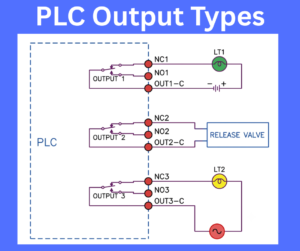
PLC Output Types explained

PLC Output Types: Relay, Transistor, TRIAC and TTL Outputs

A Programmable Logic Controller (PLC) uses output modules to send control signals to external devices such as motors, contactors, solenoid valves, indicator lamps, and alarms.
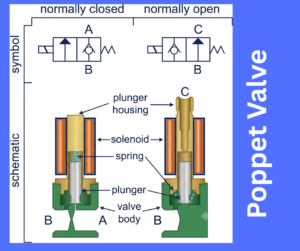
Poppet Valve explained

Poppet Valve: Types, Working Principle, Construction, Diagram, Operation, Types, Applications, Advantages and Disadvantages

A poppet valve is an important component in mechanical and fluid-control systems, designed to provide reliable switching between open and closed flow conditions. Its operation
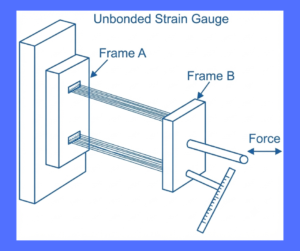
bonded and unbonded strain gauges explained

Bonded and Unbonded Strain Gauges: Construction, Working Principle, and Differences

Bonded and unbonded strain gauges are two types of resistance strain sensors used to measure mechanical deformation in industrial instrumentation, pressure transducers, force measurement systems,
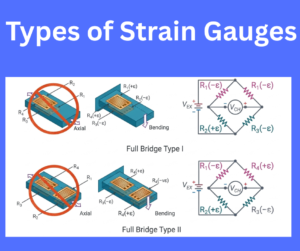
Types of Strain Gauges explained

Types of Strain Gauges: Working, Characteristics, and Applications

Strain gauges are sensors used to measure the deformation of a material subjected to mechanical loading. They detect small changes in electrical resistance or another
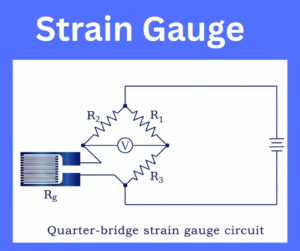
Strain Gauge explained

Strain Gauge: Working Principle, Diagram, Types, and Applications

A strain gauge is an electrical sensor used to measure the deformation of a material when it is subjected to an external force. It works
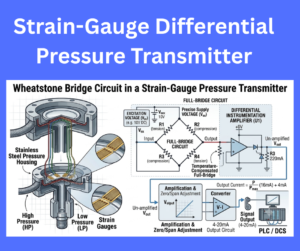
Strain-Gauge Differential Pressure Transmitter explained

Strain-Gauge Differential Pressure Transmitter: Working Principle, Diagram, Components, and Applications

A strain-gauge differential pressure transmitter measures the pressure difference between two points and converts it into an electrical signal for monitoring and control. It works
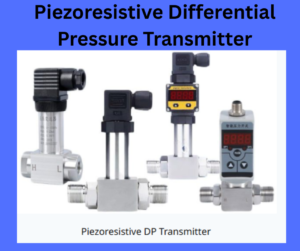
Piezoresistive Differential Pressure Transmitter explained

Piezoresistive Differential Pressure Transmitter: Working Principle, Diagram, Components, and Applications

A piezoresistive differential pressure transmitter measures the pressure difference between two points and converts it into an electrical signal for monitoring and process control. It
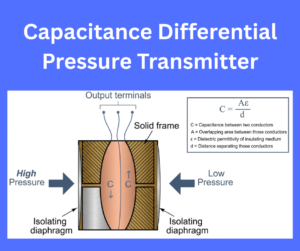
Capacitance Differential Pressure Transmitter explained

Capacitance Differential Pressure Transmitter: Working Principle, Construction, and Applications

A capacitance differential pressure transmitter is an industrial instrument that measures the pressure difference between two points using changes in electrical capacitance. It converts the
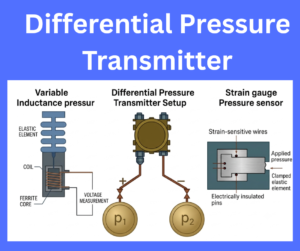
Differential Pressure Transmitter explained

Differential Pressure Transmitter: Working Principle, Types, Diagram Applications, and Calibration

A differential pressure transmitter (DP transmitter) measures the pressure difference between two points and converts it into an electrical signal for monitoring and process control.
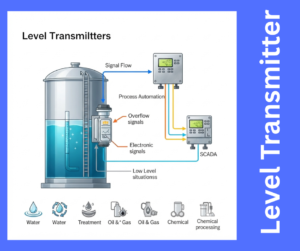
Level Transmitter explained

Level Transmitter: Types, Working Principle & Applications

A level transmitter is an industrial device that continuously measures the height of liquids, slurries, or solid materials in tanks, silos, and other process vessels.

Older posts
Page1 Page2 … Page10 Next →

Recent Posts

  • PLC Output Types: Relay, Transistor, TRIAC and TTL Outputs
  • Poppet Valve: Types, Working Principle, Construction, Diagram, Operation, Types, Applications, Advantages and Disadvantages
  • Bonded and Unbonded Strain Gauges: Construction, Working Principle, and Differences
  • Types of Strain Gauges: Working, Characteristics, and Applications
  • Strain Gauge: Working Principle, Diagram, Types, and Applications
Copyright © 2026 Instrumentation Edu Contact Us ▪ About Us ▪ Privacy-Policy ▪ Disclaimer