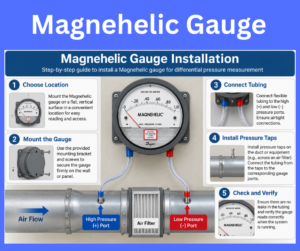
Magnehelic Gauge: Working Principle, Installation, Readings, and Applications
A Magnehelic gauge is a mechanical instrument used to measure small pressure differences between two points in an air or gas system. It is commonly
A Magnehelic gauge is a mechanical instrument used to measure small pressure differences between two points in an air or gas system. It is commonly
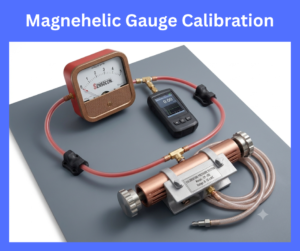
Magnehelic Gauge Calibration is the process of checking and verifying the accuracy of a differential pressure gauge by comparing its indicated readings with a known
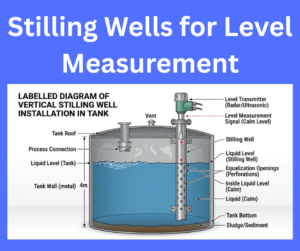
Stilling Wells for Level Measurement are vertical pipes or chambers installed inside tanks, vessels, and reservoirs to provide a relatively calm area for measuring liquid
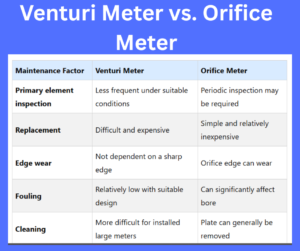
The main difference between Venturi Meter vs. Orifice Meter is the way the flow passage is reduced and how the pressure difference is produced for
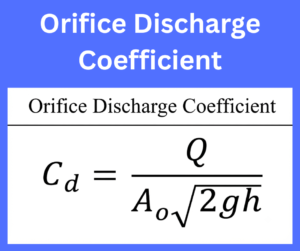
The orifice discharge coefficient, denoted by CdC_d, is a dimensionless factor used to determine the actual flow rate through an orifice. It accounts for the
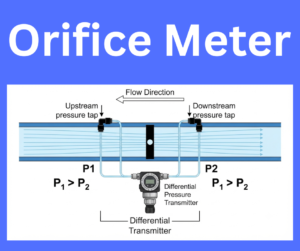
An Orifice Meter is a differential-pressure flow-measuring device used to determine the flow rate of liquids, gases, and steam through a pipe. It works by

Thermowell insertion and immersion length are two critical dimensions that determine the accuracy, response time, and reliability of temperature measurement in industrial processes. Selecting the

A bimetallic strip thermometer is a simple and reliable temperature-measuring device that works on the principle of unequal thermal expansion of two different metals. It

A bimetal is a composite material created by bonding two distinct metals into one unified piece. By combining them, the material gains a unique set

In the field of industrial automation and process control, an Instrument DataSheet plays a crucial role in ensuring accurate selection, installation, and operation of instruments.