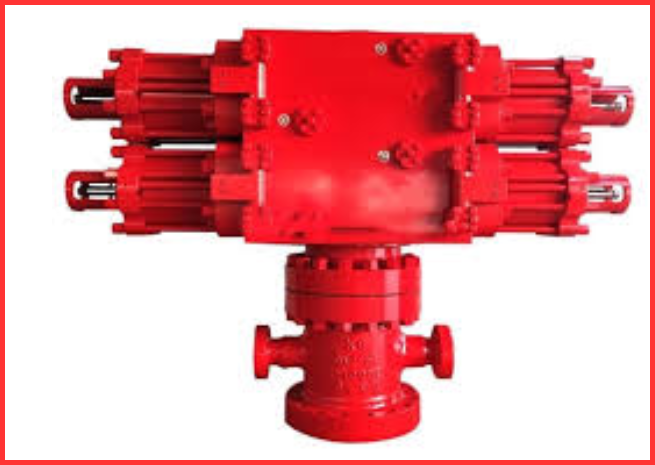
A blowout preventer (BOP) is a heavy-duty safety device designed to seal, regulate, and monitor oil and gas wells, preventing blowouts caused by the uncontrolled escape of crude oil or natural gas. It is typically installed as part of a stacked assembly of valves at the wellhead to ensure effective pressure control and well safety.
Need for Blowout Preventers in Oil and Gas Wells
Blowout preventers were engineered to manage extreme and unpredictable pressure conditions and sudden surges of formation fluids that may occur while drilling into a well reservoir.
Such formation kicks, if left unchecked, can escalate into severe blowouts. Beyond regulating downhole pressure and controlling the movement of oil and gas, blowout preventers (BOPs) also safeguard the well by stopping drill pipe, well casing, tools, and drilling fluids from being forcibly expelled from the wellbore when a blowout risk arises.
Blowout preventers play a vital role in protecting the crew, drilling rig, and the environment, while also ensuring continuous monitoring and maintenance of well integrity. By design, they act as a fail-safe system, providing a critical layer of protection for all equipment and operations associated with the well.
Blowout Preventer Terminology
In oilfield terminology, BOP (pronounced B-O-P, not “bop”) refers to a blowout preventer. Operators often use the shortened term preventer, usually combined with its specific type—such as a ram preventer—to identify an individual unit. In many cases, a blowout preventer is simply called by its type, for example, a ram.
The terms blowout preventer, blowout preventer stack, and blowout preventer system are frequently used interchangeably to describe a complete assembly made up of multiple stacked preventers with different functions, along with supporting equipment. In a typical subsea deepwater BOP system, this assembly includes electrical and hydraulic lines, control pods, hydraulic accumulators, test valves, kill and choke lines with valves, a riser joint, hydraulic connectors, and a structural support frame.
Blowout Preventer Stack and System Components
The expressions blowout preventer, blowout preventer stack, and blowout preventer system are often used interchangeably to broadly describe a complete arrangement of multiple blowout preventers stacked together, each serving a specific function, along with their supporting equipment. In a typical subsea deepwater BOP system, this setup includes electrical and hydraulic lines, control pods, hydraulic accumulators, test valves, kill and choke lines with valves, a riser joint, hydraulic connectors, and a structural support frame.
Working Principle of Blowout Preventers
Blowout preventers are installed on onshore wells, offshore drilling rigs, and subsea wells to control well pressure and maintain operational safety. On land and subsea installations, the BOP is mounted directly on the wellhead, while on offshore rigs it is positioned below the rig floor.
In subsea operations, the BOP connects to the rig through a drilling riser, which forms a continuous conduit for the drill string and returning well fluids, effectively extending the wellbore up to the rig for pressure control and circulation.
However, blowout preventers are not infallible and may fail under extreme conditions. A notable example is the Deepwater Horizon incident, where a slightly bent pipe passed through the BOP, preventing it from cutting the pipe and leading to a catastrophic blowout that caused severe environmental and economic damage.
Role of Blowout Preventers During Drilling Operations
During the drilling of a high-pressure well, the drill string passes through the blowout preventer (BOP) stack as it advances toward the oil or gas reservoir. Throughout this process, drilling fluid, commonly known as mud, is pumped down the drill string to the drill bit, where it cools the bit and carries cuttings away from the bottom of the hole. The mud then flows back to the surface through the annulus, the space between the drill pipe and the well casing.
This continuous circulation of drilling mud creates a hydrostatic pressure column that counterbalances the formation pressure encountered during drilling. By maintaining this pressure balance, the BOP system plays a crucial role in preventing formation fluids from entering the wellbore, reducing the risk of kicks and ensuring controlled, safe drilling operations.
Well Control and Kick Handling Using Blowout Preventers
When a formation kick occurs—meaning formation fluids enter the wellbore unexpectedly—rig personnel or automated safety systems immediately activate the blowout preventer (BOP) units. Closing the BOP seals the annulus, effectively stopping the uncontrolled upward flow of fluids and stabilizing the well. This rapid response is critical to prevent the kick from escalating into a blowout.
After the well is secured, operators circulate heavier drilling mud into the well through the drill string. The mud travels down to the bottom of the well, flows upward through the annulus, and exits via the choke line at the base of the BOP stack. Chokes, which act as flow restrictors, regulate the discharge rate and allow controlled pressure management at the surface.
Circulation continues until the increased hydrostatic pressure of the mud overcomes the formation pressure. Once kill-weight mud fills the entire wellbore from bottom to surface, the well is considered safely killed, allowing drilling or corrective operations to resume under controlled conditions.
Bullheading Method for Well Control
If the wellbore remains stable, drilling operations can safely continue. However, if normal circulation is not possible, the well may be controlled using a “bullheading” method, where heavy mud is pumped directly from the surface through the kill line at the base of the BOP stack. This approach is less preferred due to the higher surface pressures required and because much of the existing mud in the annulus must be forced into the surrounding formations in the open-hole section below the deepest casing shoe. While effective in emergencies, bullheading carries additional risks and is generally reserved for situations where conventional circulation is impractical.
Consequences of Blowout Preventer Failure
If a blowout preventer (BOP) fails to contain the upward pressures from a formation kick, the results can be catastrophic. Uncontrolled fluids can force drill pipe, casing, oil, and gas violently up the wellbore, posing serious safety risks to the rig crew and potentially causing structural damage to the drilling rig.
Beyond immediate physical hazards, a blowout can compromise well integrity, leading to long-term operational and environmental consequences, including oil spills, gas leaks, and contamination of surrounding ecosystems. Equipment loss, environmental damage, and regulatory penalties often accompany such incidents, making BOP reliability essential for safe and sustainable drilling operations.
Inspection, Testing, and Maintenance of Blowout Preventers
Given the critical role of blowout preventers (BOPs) in protecting crew safety, environmental integrity, and the structural security of the drilling rig and wellbore, regulatory authorities mandate regular inspection, testing, and maintenance of these systems.
Routine checks ensure that all BOP components, including rams, annular preventers, control pods, and hydraulic systems, function correctly under high-pressure conditions. Testing schedules can range from daily functional tests on high-risk or critical wells to monthly or periodic inspections on lower-risk wells, depending on operational conditions.
Proper maintenance also includes refurbishing worn components, verifying hydraulic pressure, and testing fail-safe mechanisms, all of which are essential to guarantee that the BOP will operate reliably during an emergency and prevent potential blowouts. Regular testing and preventive maintenance significantly enhance well control reliability and minimize the risk of environmental and operational disasters.
Deepwater and Subsea Blowout Preventer Challenges
As easily accessible oil and gas reserves become scarce, the industry is increasingly turning to remote subsea and deepwater wells, which pose unique challenges for blowout preventers (BOPs). These BOPs often remain submerged for extended periods—sometimes up to a year—under extreme underwater pressures and harsh environmental conditions, requiring exceptional durability and reliability.
To handle these demanding conditions, BOP assemblies have grown significantly in size and weight; for instance, a single ram-type BOP can weigh over 30,000 pounds. However, the space available on existing offshore rigs for BOP stacks has not expanded proportionally, creating a logistical challenge for installation and maintenance.
Consequently, recent technological advancements have focused on reducing the footprint and weight of BOP units while enhancing their pressure-handling capacity, fail-safe operation, and overall reliability. Innovations include modular stack designs, improved hydraulic systems, advanced materials for deepwater endurance, and automated monitoring and control systems, all aimed at ensuring safe and efficient operation in the most extreme subsea drilling environments.
Types of Blowout Preventers
Blowout preventers are generally classified into two primary types:
1. Ram Blowout Preventer
2. Annular Blowout Preventer
In practice, BOP stacks often combine both types to maximize well control and safety. Typically, a single annular BOP is positioned at the top of the stack, while several ram BOPs are arranged beneath it. This combination ensures flexibility in sealing the wellbore under various drilling conditions and provides multiple layers of protection against uncontrolled fluid flow.
Blowout Preventer Control Methods
Surface-Controlled Blowout Preventer Systems
For wells drilled on land or in shallow water where the wellhead remains above the water surface, blowout preventers are typically operated using hydraulic pressure supplied from a remote accumulator.
Multiple control stations are strategically positioned around the rig to allow operators to manage BOP functions efficiently. Additionally, these preventers can be manually closed by turning large, wheel-like handles, providing a reliable backup method for well control in case of hydraulic system failure.
Subsea Blowout Preventer Control Methods
In deepwater offshore operations, where the wellhead is located near the seafloor, subsea blowout preventers are controlled using several advanced methods to ensure reliable operation under extreme conditions. There are five primary control mechanisms employed to operate a subsea BOP effectively:
Hydraulic Control Signal
This method transmits commands from the surface to the subsea BOP through a hydraulic umbilical, allowing precise operation of the preventer’s rams and annular elements under high-pressure conditions.
Electrical Control Signal
In this method, signals are transmitted from the surface to the subsea BOP via a control cable, enabling accurate activation and monitoring of the BOP’s components, including rams, annular preventers, and auxiliary systems.
Acoustical Control Signal
This technique uses a modulated or encoded sound pulse transmitted from the surface through an underwater transducer to control the subsea BOP, allowing operation even when traditional hydraulic or electrical lines are compromised.
ROV Intervention
Remotely Operated Vehicles (ROVs) are deployed to mechanically operate BOP valves and deliver hydraulic pressure to the stack using “hot stab” panels, providing a critical means of control when direct surface signals are unavailable or compromised.
Deadman Switch / Auto Shear
This is a fail-safe mechanism that automatically activates selected BOPs during an emergency, closing the preventers even if control, power, and hydraulic lines are damaged or severed, ensuring well containment under critical conditions.Deadman Switch / Auto Shear: fail-safe activation of selected BOPs during an emergency, and if the control, power and hydraulic lines have been severed.
Emergency Disconnect System (EDS) in Blowout Preventers
An Emergency Disconnect System (EDS) is designed to safely separate the drilling rig from the well during critical emergency situations, such as uncontrolled pressure surges or equipment failure.
When activated, the EDS automatically engages the deadman switch, ensuring that the BOP, kill, and choke valves close to maintain well control and prevent a blowout. Depending on the system design, the EDS can function either as an integrated subsystem within the BOP stack’s control pods or as a standalone unit, providing redundancy and enhancing the overall safety and reliability of subsea drilling operations.
This system is especially crucial in deepwater environments, where rapid manual intervention is often not possible.
Hydraulic Accumulators and Automatic BOP Activation
In drilling operations, rig pumps typically supply hydraulic pressure to the blowout preventer (BOP) stack through dedicated hydraulic lines. Hydraulic accumulators mounted on the BOP stack store pressurized fluid, enabling the preventers to close even if the stack becomes disconnected from the rig.
Additionally, modern BOP systems can be automatically triggered to activate in response to excessive wellbore pressure or abnormal flow rates, providing an extra layer of protection against blowouts. These features ensure rapid and reliable BOP operation, maintaining well control under both routine and emergency conditions.
Applications of Blowout Preventers
Blowout preventers (BOPs) are available in a wide range of styles, sizes, and pressure ratings, allowing them to be tailored to specific well conditions and drilling environments. Individual BOP units, each designed for a particular function, are combined to form a BOP stack, providing comprehensive well control.
To enhance reliability and fail-safe performance, multiple preventers of the same type are often included in the stack, ensuring redundancy and minimizing the risk of uncontrolled fluid release during critical drilling operations. This versatility makes BOPs essential for onshore, offshore, and deepwater drilling projects across the oil and gas industry.
Primary Functions of a Blowout Preventer System
The primary functions of a blowout preventer (BOP) system are critical for maintaining well control and ensuring safe drilling operations. These functions include:
- Confining well fluids to the wellbore, preventing uncontrolled release of oil, gas, or drilling mud.
- Providing a mechanism to introduce fluids into the wellbore, such as drilling mud or kill-weight fluid, to maintain hydrostatic pressure.
- Allowing controlled removal of fluids from the wellbore, enabling precise management of pressure and flow during drilling, well killing, or circulation operations.
By performing these core functions, a BOP system safeguards both the drilling crew and the environment while maintaining the structural integrity of the well.
Additional Functions of Blowout Preventers
Additional Functions of Blowout Preventers
Beyond their primary roles, blowout preventer (BOP) systems perform several additional critical functions to enhance well control and ensure operational safety:
- Regulate and monitor wellbore pressure, maintaining safe drilling conditions and preventing kicks.
- Center and hang off the drill string within the wellbore, stabilizing the pipe during operations.
- Shut in the well, sealing the annulus between the drill pipe and casing to stop fluid flow.
- “Kill” the well, preventing the influx of formation fluids from the reservoir into the wellbore.
- Seal the wellhead, effectively closing off the wellbore to maintain containment.
- Sever casing or drill pipe during emergencies, providing a last-resort safety measure to prevent blowouts.
These functions collectively ensure that the BOP system acts as a comprehensive safety and control mechanism, safeguarding the crew, equipment, and environment during complex drilling operations.).
Conclusion
Blowout preventers (BOPs) are indispensable safety devices in the oil and gas industry, designed to prevent uncontrolled releases of oil, gas, and drilling fluids during high-pressure well operations. By regulating wellbore pressure, containing formation kicks, and providing both primary and additional control functions, BOPs safeguard the crew, rig, and environment while maintaining well integrity.
With various types—such as ram and annular BOPs—and multiple control methods, including hydraulic, electrical, acoustical, ROV intervention, and deadman/auto shear systems, modern BOPs are engineered for reliability in onshore, offshore, and deepwater environments. Their design emphasizes redundancy, fail-safe operation, and adaptability, ensuring effective performance even under extreme conditions.
Overall, BOP systems remain a critical component of well control, combining advanced technology and robust engineering to minimize risks, prevent blowouts, and enable safe, efficient drilling operations.