Understanding Relief Valve Orifice Sizes is critical for ensuring safe and efficient pressure protection in industrial systems. Whether you’re working with boilers, pressure vessels, or process equipment, selecting the correct pressure relief valve orifice sizes directly impacts safety, compliance, and system performance.
In this comprehensive guide, we’ll explore standard Pressure Safety Valve (PSV) orifice sizes, API size designations, selection methods, and how to use a relief valve orifice size chart correctly.
What is a Relief Valve?
A relief valve, also known as a pressure relief valve (PRV), is a mechanical safety device that protects pressurized systems from overpressure. It is designed to automatically open when pressure exceeds a preset limit, releasing excess fluid to prevent equipment damage or failure.
Relief valves are commonly installed on vessels, tanks, boilers, and piping systems. They act as the final safeguard after control systems and emergency shutdown measures.
In most countries, safety regulations and standards from organizations like the American Society of Mechanical Engineers require relief valves to protect pressurized equipment.
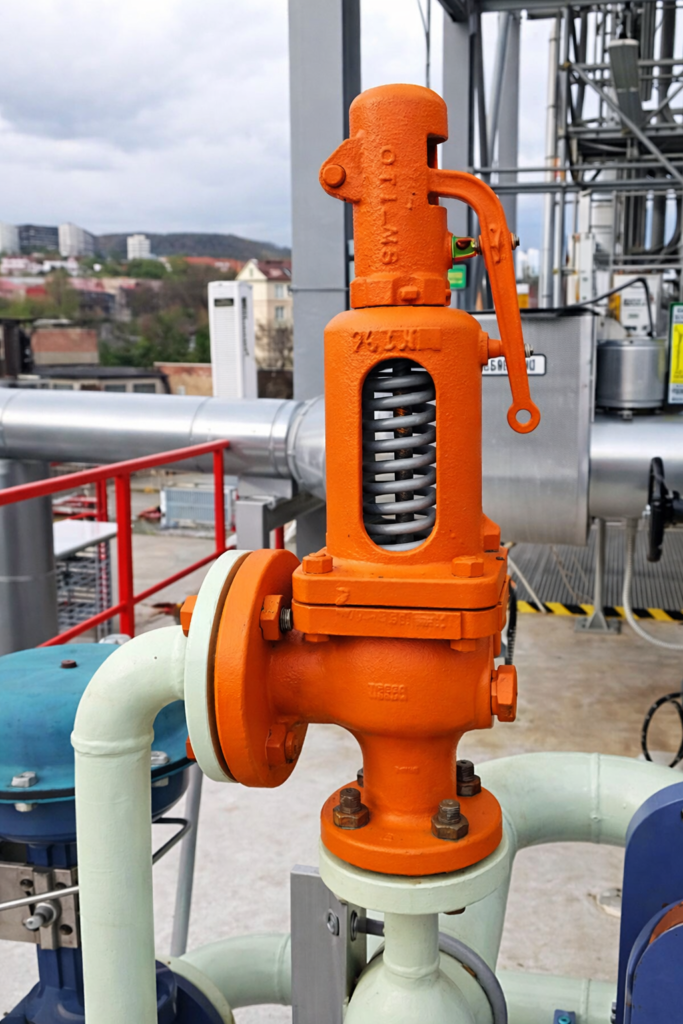
What Are Relief Valve Orifice Sizes?
Relief Valve Orifice Sizes refer to the effective flow area inside a pressure relief valve that determines how much fluid can be discharged during an overpressure event.
The orifice size controls:
- Maximum discharge capacity
- Pressure containment safety
- Compliance with industry standards
- Equipment protection efficiency
Selecting the correct relief valve orifice size ensures that excess pressure is relieved quickly without damaging upstream equipment.
Why Relief Valve Orifice Sizes Matter
Choosing incorrect relief valve sizes can result in:
- Undersized valve → Inadequate pressure relief, equipment damage
- Oversized valve → Valve chatter, instability, reduced lifespan
- Non-compliance with safety standards
Proper pressure relief valve orifice sizes are essential in industries such as oil & gas, petrochemical, power generation, and manufacturing.
Standard API Orifice Sizes (PSV Orifice Size Designation)
Most industrial PSV orifice sizes follow standards established by the American Petroleum Institute (API), particularly API 526.
API assigns letter designations (D, E, F, G, H, J, K, L, M, N, P, Q, R, T) to standard API orifice sizes.
Common API PSV Orifice Sizes
| Letter | Bore Area (in²) | Bore Area (cm²) |
| D | 0.110 | 0.71 |
| E | 0.196 | 1.26 |
| F | 0.307 | 1.98 |
| G | 0.503 | 3.24 |
| H | 0.785 | 5.06 |
| J | 1.287 | 8.30 |
| K | 1.838 | 11.85 |
| L | 2.853 | 18.40 |
| M | 3.600 | 23.23 |
| N | 4.340 | 28.00 |
| P | 6.380 | 41.16 |
| Q | 11.050 | 71.29 |
| R | 16.000 | 103.22 |
| T | 26.000 | 167.74 |
These standardized PSV orifice size designations simplify valve selection and ensure interchangeability across manufacturers.
Relief Valve Orifice Size Chart Explained
A relief valve orifice size chart typically includes:
- API letter designation
- Effective discharge area
- Inlet & outlet flange sizes
- Capacity at specific pressures
Engineers use these charts to match required relieving capacity (calculated using flow equations) with the closest standard relief valve orifice size.
When reviewing a chart, always verify:
- Fluid type (gas, steam, liquid)
- Set pressure
- Backpressure
- Temperature
- Required relieving capacity
How to Select the Correct Relief Valve Orifice Size
Selecting the correct relief valve orifice sizes involves several engineering steps:
1. Determine Required Relieving Capacity
Calculate based on:
- Worst-case scenario (fire, blocked outlet, thermal expansion)
- Fluid properties
- Maximum allowable working pressure (MAWP)
2. Apply Governing Standard
Most refineries and process plants follow API standards for API orifice sizes.
3. Match Required Area to Standard PSV Orifice Sizes
Choose the next larger available standard PSV orifice size to ensure adequate flow capacity.
4. Verify Valve Stability
Oversized relief valve sizes may cause chatter. Proper sizing ensures smooth operation.
Difference Between Relief Valve Sizes and Orifice Sizes
It’s important not to confuse:
- Relief valve sizes → Refers to inlet/outlet flange dimensions (e.g., 2” x 3” valve)
- Relief valve orifice sizes → Refers to internal effective flow area
Two valves with identical inlet/outlet sizes may have different pressure relief valve orifice sizes, affecting their discharge capacity.
Applications of Different PSV Orifice Sizes
Different PSV orifice sizes are used based on application:
Small Orifice Sizes (D–F)
- Instrument protection
- Small vessels
- Low-flow systems
Medium Orifice Sizes (G–K)
- Process equipment
- Heat exchangers
- Reactors
Large Orifice Sizes (L–T)
- Large storage tanks
- High-capacity steam systems
- Fire case scenarios
Correct PSV orifice size designation ensures regulatory compliance and operational safety.
Industry Standards Governing Relief Valve Orifice Sizes
Common standards include:
- API 520 – Sizing and selection
- API 521 – Pressure-relieving systems
- API 526 – Flanged steel pressure relief valves
These standards define accepted API orifice sizes, dimensions, and installation practices.
Common Mistakes When Selecting Relief Valve Orifice Sizes
Avoid these errors:
- Using flange size instead of effective orifice area
- Ignoring backpressure corrections
- Not considering fire-case scenarios
- Oversizing leading to valve chatter
- Not referencing an updated relief valve orifice size chart
Proper engineering review prevents costly failures.
Conclusion
Selecting the correct Relief Valve Orifice Sizes is one of the most important safety decisions in pressure system design. Understanding pressure relief valve orifice sizes, standardized PSV orifice sizes, and how to interpret a relief valve orifice size chart ensures:
- Regulatory compliance
- Equipment protection
- Operational stability
- Long-term reliability
Always follow API standards, perform accurate capacity calculations, and verify final sizing with manufacturer data to ensure optimal system performance.
Frequently Asked Questions (FAQs)
Medium sizes like G, H, and J are widely used in process industries due to moderate capacity requirements.
The letter (e.g., “J”) corresponds to a standardized effective discharge area defined by API.
In most oil & gas and petrochemical facilities, standardized API orifice sizes are required for compliance and interchangeability.
Yes. API standardization ensures consistent pressure relief valve orifice sizes across manufacturers.
It is based on Equation 6.3.1.1, which uses API fire-case modeling developed in 1983. The method considers transient vessel heating, gas venting, and delayed temperature rise, forming the technical basis for sizing relief devices on stationary compressed gas containers.
Read Next: